

For decades, supply-side economics has focused on reducing barriers to production—lowering punitive tax rates, encouraging investment, and creating incentives for innovation. But as many traditional tax and regulatory reforms have matured, a new obstacle to American economic growth has come into sharper focus: the cost and complexity of the civil justice system.
This month, National Review magazine made lawsuit reform a cover story with a simple argument to strengthen the economy. The argument is straightforward: excessive litigation imposes a heavy drag on economic productivity. Direct costs—including settlements, verdicts, legal fees, and rising insurance premiums—are estimated to exceed $500 billion annually.
Yet the larger burden may be invisible: capital that could have gone toward hiring workers, funding research, launching new ventures, or expanding operations is instead diverted into legal defense and risk management.
This burden falls especially hard on small and midsize businesses, which often lack the financial cushion to absorb prolonged litigation. The threat of legal exposure can discourage entrepreneurs from taking risks, reduce innovation, and prevent promising businesses from ever launching in the first place. In that sense, legal excess is not just a courtroom problem. It is an economic growth problem.
Here in Texas, advocates argue that meaningful reform should focus on improving the integrity and efficiency of the system. These common-sense policy changes include:
- Requiring stronger evidence before expensive discovery begins
- Enforcing sanctions for frivolous filings
- Discouraging serial abuse of the courts
- Tightening standing requirements so plaintiffs must demonstrate real harm
- Strengthening judicial ethics and transparency
- Raising evidentiary standards in civil cases is also viewed by some reformers as a way to better balance fairness for plaintiffs with due process for defendants.
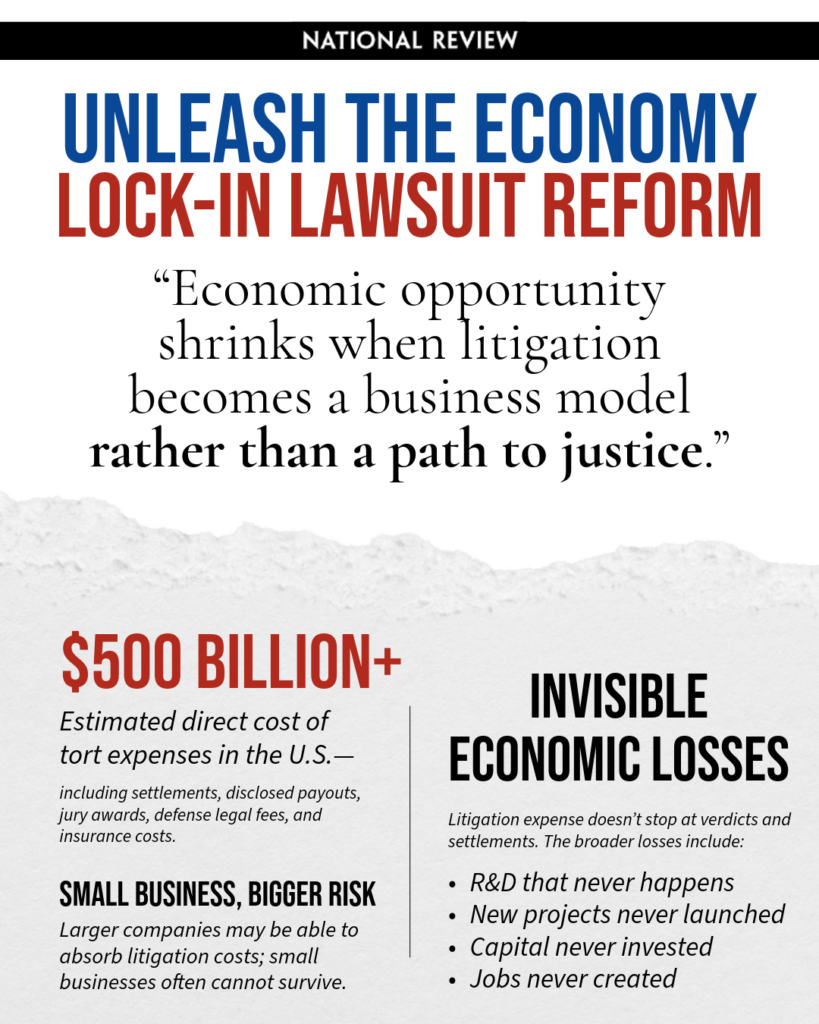
At its best, the legal system is essential to a free society. It provides remedies for genuine harm, holds bad actors accountable, and protects civil rights. But when litigation becomes a strategic weapon rather than a path to justice, the costs ripple far beyond individual cases. Economic opportunity shrinks, entrepreneurship suffers, and public trust in institutions erodes.
If America is serious about long-term flourishing, legal reform may be one of the most consequential—and overlooked—economic debates ahead.