
Friends,
Want to stop lawsuit abuse? Start with elections.
Voters across the nation are heading to the polls, and while candidates have their standard talking points, few include lawsuit abuse as a growing drag on affordability. As abuse buried inside of the lawsuits ticks up, so does the cost of groceries, gas, insurance, and just about everything else. We’ve reported extensively on the hidden tort tax on businesses and families, medical billing fraud in lawsuits, and even the malicious intent of foreign funders of lawsuits.
The reality is that elections are the first step to stopping lawsuit abuse. TLR recognized this in the mid 1990s and took action to elect competent lawmakers who wanted to grow the economy, not hobble it by enabling frivolous lawsuits. That fight continues today through the TLR Political Action Committee and the Judicial Fairness PAC. Both have spent significant amounts this cycle supporting candidates who want to stop lawsuit abuse and pass reforms to lower the costs of basic goods and services.
As we wait for the results of next month’s election, we’re not stopping the drumbeat on lawsuit abuse. This week, more examples show why reforms are necessary to protect the national and state economies from ambulance-chasers and predatory lenders masking loans as investments. Just another reminder to do your research before heading to the polls.
For the future of Texas,
Ryan Patrick
CEO | TLR

Election Links and Reminders
Make a Plan, Cast Your Vote
Confirm You’re Registered
Mailing Your Ballot? Track your ballot
Voting in person? Find Your Polling Place
Pick a Date to Vote
EARLY VOTING End Friday, October 30
ELECTION DAY Tuesday, November 3
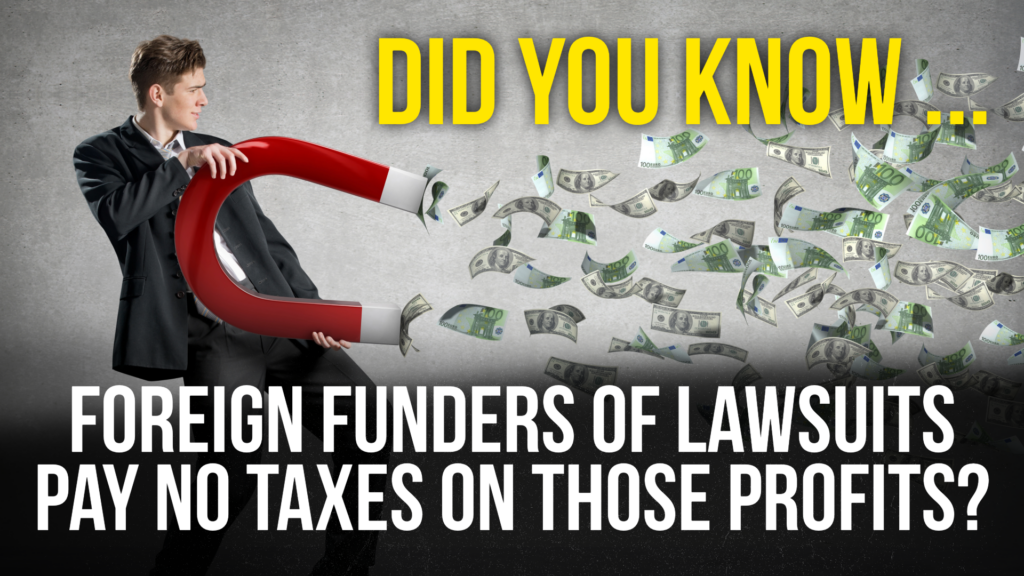
Why do foreign funders for lawsuits get a tax break? And will the Treasury Secretary do something about it?
At a House Financial Services Committee hearing, Treasury Secretary Scott Bessent called Third-Party Litigation Funding a “malignancy within our legal and financial system”. Former World Bank president David Malpass and former Treasury official James Carter explain in National Review why Congress should act on it.
Here’s the problem. Contingency-fee lawyers pay ordinary income tax on their share of a settlement. However, a funder that takes a share of the same case often reports it as a lower-taxed capital gain. A foreign funder may owe no U.S. tax at all. (Hint, hint – personal injury cases are being treated as investment vehicles.)
The money at stake is large. Swiss Re Institute data shows the U.S. produces about a quarter of global GDP but accounts for more than half of worldwide litigation-funding activity. The global market for this funding was about $19 billion in 2024 and could top $50 billion by 2032. Malpass and Carter were among 80 economists who signed an open letter urging Congress to close the gap. Rep. Kevin Hern’s Tackling Predatory Litigation Funding Act would tax these profits as ordinary income and require withholding at payment.
Texans pay the price for lawsuits that exist to turn a profit. Congress should not hand the investors behind them a discount.
Want to Read More?
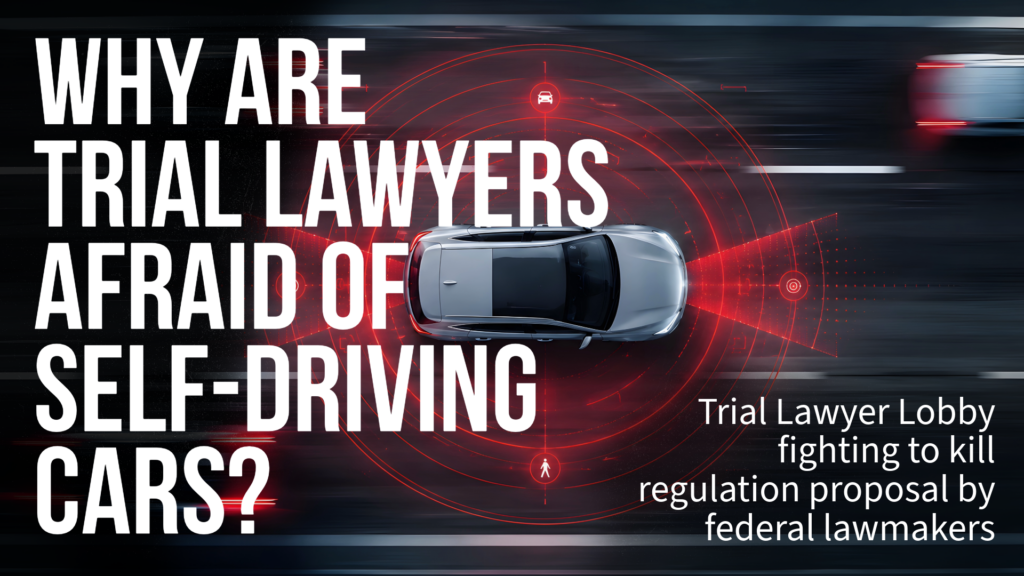
Why Are Trial Lawyers Afraid of Self-Driving Cars?
Car crashes are the bread and butter of personal injury practice, and they don’t even have to be serious accidents. Writing for the American Council on Science and Health, Dr. Barbara Pfeffer Billauer estimates that insurance payouts run $180 billion to $220 billion a year. At a typical one-third contingency fee, that puts $60 billion to $70 billion in lawyers’ pockets.
Now picture a car that does not crash. Waymo’s own research reports 94% fewer serious injuries, 82% fewer airbag deployments and 93% fewer pedestrian injuries than human drivers. Researchers cited in the piece say wider adoption could save nearly 30,000 lives a year. Every day companies like Waymo and Tesla are gathering more and more mileage data which allows them to refine their software and paint a clearer picture on the effectiveness of self-driving cars.
Congress is considering the SELF DRIVE Act of 2026. It would set federal safety standards for autonomous vehicles and override stricter state laws for manufacturers that follow them. The American Association for Justice, the national trial lawyer lobby, is predictably fighting it. Experts, however, say the billboard lawyers fighting this could kill their golden goose as more of their targeted defendants (end-of-line delivery trucks) deploy these safer automobile alternatives to strengthen safety and reduce lawsuit risks. As the technology advances, why would a company with litigation exposure not phase in autonomous trucks? We know drones will become more prevalent and I assume Amazon, FedEx and UPS are working on autonomous delivery vehicles which will be safer on the road and more efficient for the “driver” who has to run to your front door.
When the people who profit from crashes oppose the technology that prevents them, voters should notice and select candidates accordingly.
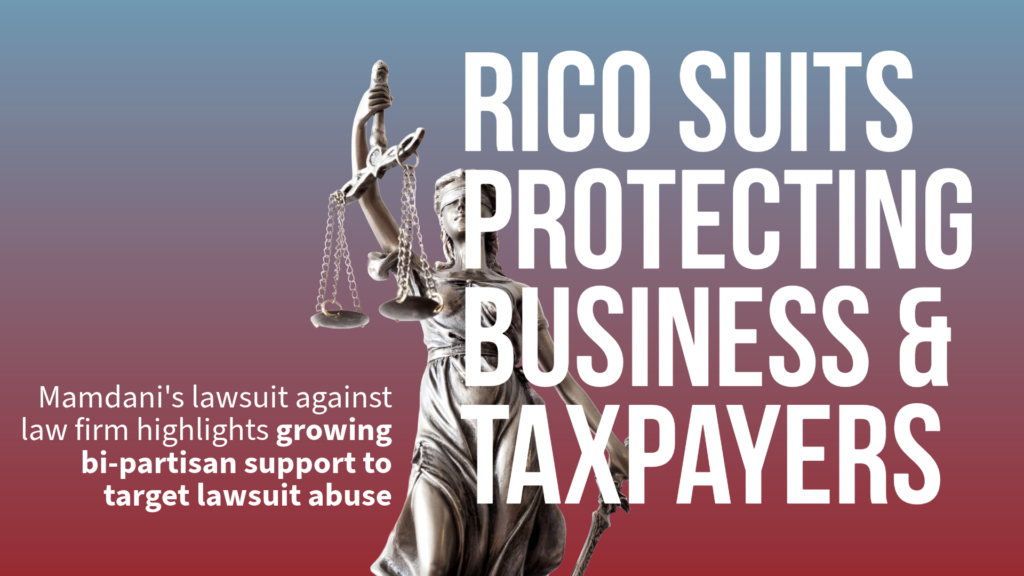
Cities and Businesses Turn To RICO to Fight Phony Claims
The city that made mobsters famous is turning to a mob-busting statute to go after a personal injury law firm. The city sued Manhattan firm Asher & Associates and its principals in federal court under the Racketeer Influenced and Corrupt Organizations Act, known as RICO. The city alleges the firm invented roadway-defect stories to blame the city for scooter, moped, and bicycle injuries, while medical records and statements to ambulance crews and hospital staff describe fights, assaults, and hit-and-run crashes instead.
The firm’s suits sought tens of millions of dollars from the city. One demanded $3 million over a single Brooklyn bike crash blamed on a defective road, yet the city says the medical records describe the injuries coming from a fight. “Personal injury laws exist to protect actual victims of trauma,” said New York City Corporation Counsel Steven Banks, who accused the firm of running an illegal scheme to defraud taxpayers.
Meanwhile, businesses like Uber, State Farm, FedEx, and others have turned to the RICO statute to pursue law firms and medical networks, including in Houston. Federal statutes meant to protect the country from criminals now target the bad actors behind these manufactured lawsuit pipelines.
What to read more?
Boom Belt: Bad Actors Caught in Lawsuit Abuse