
Friends,
For three decades, TLR has helped pass reforms that made Texas courts fairer and more predictable, fueling the Texas Economic Miracle. Billboard lawyers keep finding new ways to undermine that balance — A.I. is just the latest tool. Last week, a Texas woman sued a Michigan law firm over allegedly illegal A.I.-voice solicitation calls.
But old tricks still work best, according to a Cleveland trial lawyer’s new memoir. A profile on the book details how attorney Tim Misny admits to orchestrating medical billing fraud by pressuring physicians dependent on his referral fees. PACT calls it “a window into the transactional ecosystem” beneath the personal injury industry.
Speaking of transactional ecosystems: North Carolina just became the first state to fully ban Third-Party Litigation Financing (TPLF). Other states have passed mandatory disclosure laws for domestic financiers that include a ban on foreign-backed lawsuit funding. Over a dozen states have passed or are considering restrictions or required disclosure of TPLF. What should Texas do to protect its courts from foreign influence?
For the future of Texas,
Ryan Patrick
CEO | TLR
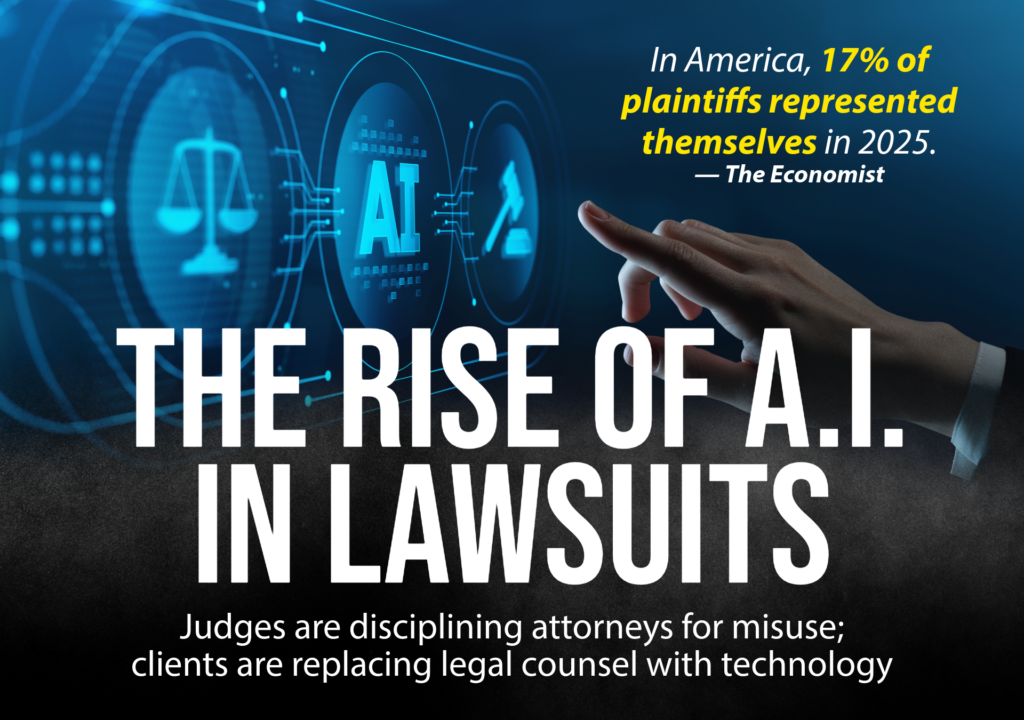
Earlier this month, a report from BloombergLaw.com highlighted the record number of filings in state appellate courts. One attorney said the 23% increase is likely coming from inexperienced lawyers relying on A.I. to prepare court documents. A report from The Economist last month also points to the rise in A.I.-backed self-representation in courts (dubbed “vibe lawyering”). It’s a global phenomenon that is starting to have major consequences for the billboard attorneys who rely on technology to write legal briefs and the pro se individuals who think they can use A.I. to sue whomever they want.
While the rise in A.I. tools in legal work is nothing new, what is becoming more common are the actions taken by judges disciplining licensed attorneys for misuse and a failure to provide accountability in the work product. Below are just a few articles highlighting judicial action against lawyers relying on A.I. work product that either wastes the court’s time or is riddled with errors:
‘No substitute for actual intelligence’
A Florida federal appeals court unanimously recommended disciplinary action against a plaintiff’s attorney for blatant use A.I. “Completely outsourcing one’s legal work to artificial intelligence software is not competent … [it is] a dramatic violation of the client’s interest.” The court referred the attorney to a conduct committee and billed the attorney’s client for court costs.
Attorneys’ lack of candor over AI errors leads to stricter sanctions
The 9th Circuit Court of Appeals in California sanctioned two attorneys for filing briefs with fabricated cases and misattributed quotes generated by AI. The sanctions were compounded by the attorneys’ failure to be upfront about the source of the errors.
Fed. Court Suspends Pa. Attorney for AI-Hallucinated Citations
A trial attorney in Pennsylvania was fined $1,500 and given a six-month suspension from the court for filing briefs that contained A.I.-generated hallucinated citations.
‘Contrived from thin air’: Court slams attorney for submitting brief filled with made-up cases and quotes ‘fabricated’ by AI, gets record fine
An Oregon appellate court found $16,500 worth of violations but decided to cap the sanctions at $10,000, a record.
A federal judge sanctioned a [New Jersey] attorney for filing a brief with AI hallucinations, again
An attorney was busted for including AI hallucinations in a case filing and was fined $2,500 by the judge. The attorney did it again and received an additional $5,000 fine.
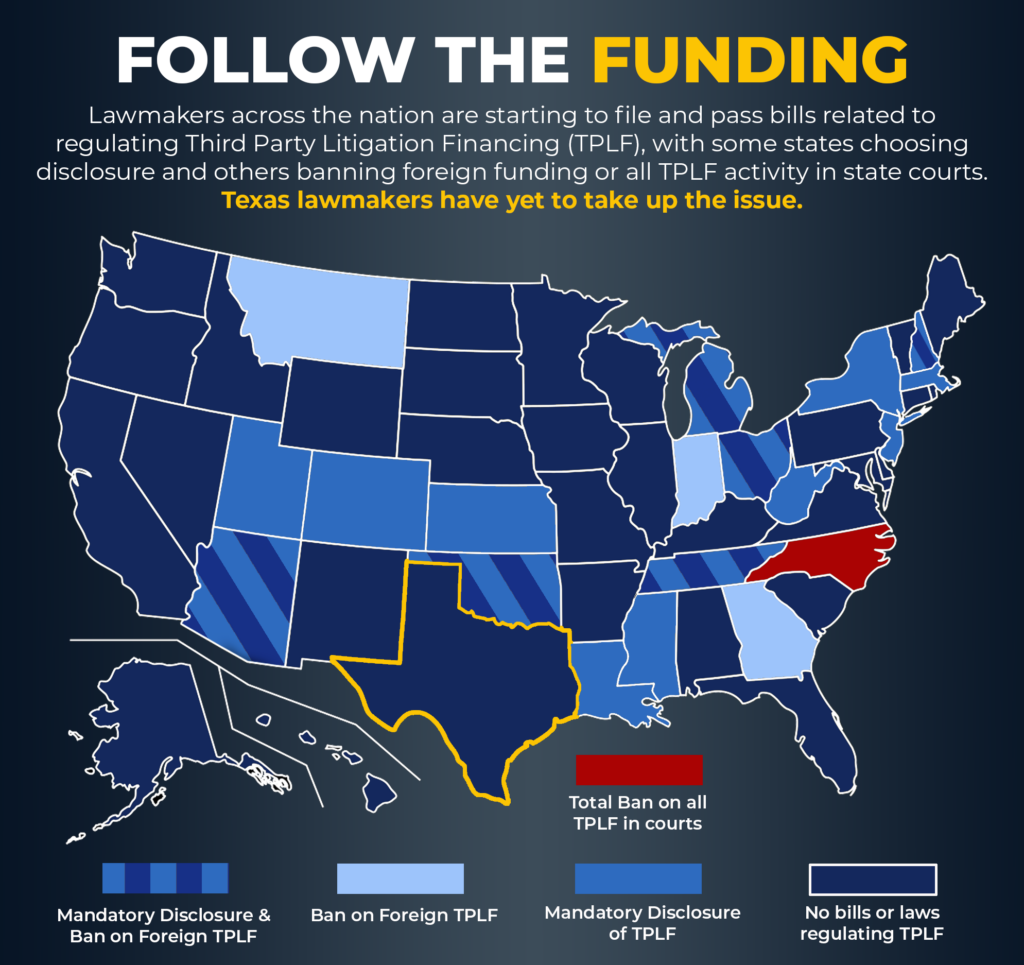
Third Party Lawsuit Financing (TPLF) is becoming more of a hot topic among policymakers. The $15 billion industry has drawn more ire in recent years following DOJ reports exposing the dangers of allowing foreign funding for lawsuits targeting American companies. Civil action is constitutionally protected but regulated individually by states, which is why there continues to be a patchwork of laws and rules for the contentious investment industry.
Last week, Ohio’s governor signed a new law making public disclosure of TPLF agreements and banning foreign entities (like sovereign wealth funds) from investing in lawsuits. Last month, North Carolina passed the nation’s first ban on all TPLF activities. As lawmakers talk about affordability issues, the rise in lawsuits is part of that conversation. And the industry that allows foreign adversaries to profit from lawsuits targeting American companies is gaining more scrutiny. Click here to read more about TPLF, how it works, and what Texas can do to address the lack of regulations in the 2027 legislative session.